Almost every Government in Europe kept very tight state control over broadcasting; almost all the private stations that had been tolerated in the 1930s in some countries, were frozen out after WWII. Some entrepreneurs thought the Voice of America ship in the Mediterranean was a good template for setting up stations in Northern Europe and by 1958 the first stations were heard in Scandinavia. They were a success, and Radio Mercur was swiftly followed by Radio Syd, Radio Nord and many others.
Word of this method of getting around the broadcasting legislation, by going offshore, spread to Holland and Belgium and then eventually the UK, with the first radio ship off England being Radio Caroline in 1964.
Radio Caroline arrived just in time to help boost the burgeoning British music explosion, spear-headed by the Beatles and the Stones. In the mid 60s over a dozen stations were beaming the latest music into the UK from a variety of ships and old forts.
Most of the radio ships were starved out by new legislation in August 1967 by the Marine Offences Act, which made it an offence to use a British ship for broadcasting in British waters, to supply anything for use in offshore radio. For the first time it became illegal to play a pop record, read the news or preach a sermon on the radio, if it was transmitted by a ship.
Radio Caroline bravely continued, obtaining the ship's supplies from Holland, which had no such laws until 1974. In that year, the Dutch brought in similar legislation and three of the four radio ships moored off its coast, Radio Veronica, Radio Atlantis and Radio North Sea International, all closed down.
Caroline continued again, ostensibly supplied from Spain, although much closer ports were used covertly to keep the stations on the air in lcuding Radio Mi Amigo, and later Radio Monique - which both broadcast in Dutch and Flemish.


Win YOUR dream car
plus a briefcase of cash
Best of the Best are a UK public company who pioneered the 'WinA Car' draws seen at airports for the last 22 years. As well as your dream car, BOTB now also leave a briefcase of cash in the boot - up to £100,000. Tickets to win YOUR dream car and a briefcase of cash are priced from 85p to £20 and you can watch the draws each night online. Now you can enter their competitions online - NOW! just click the car for details.
Radio Caroline - (who?)

THE
RADIO
CAROLINE
BIBLE
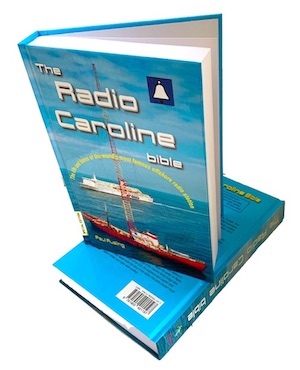
is a fascinating new book that tells tells the inside story of Radio Caroline, from the very beginning of the project – right up to date.
Radio Caroline is without doubt the world's most famous radio ship. Was she a "pirate"? No, not really. Radio Caroline was based on a ship in order to COMPLY with the laws of the day.
The Caroline Beat Fleet
Radio Caroline has used several ships throughout her six decades of broadcasting:
MV CAROLINE The first ship was a converted Danish ferry, which was fitted out in Greenore, Ireland, and arrived on station off the UK at Easter 1964. She sailed to an anchorage near the Isle of Man to expand Radio caroline's coverage to Wales, Northern England, Scotland and Ireland.
MV MI AMIGO began her broadcasting career off the Swedish coast in 1961 and was hired by Radio Atlanta, for whom she began broadcasting a month after Caroline. After merging, the Mi Amigo continued serving London and the South East as Radio Caroline South. She used another Swedish radio ship, the Cheeta II for a while in 1966.
EIGHTIES
In 1983 Caroline's latest ship, the former Grimsby trawler arrived:
MT Ross Revenge, broadcast from off the Thames Estuary until 1991, when a new Broadcasting Act scared away many backers and staff. The ship was almost wrecked on the Goodwin Sands, and has been sporadically broadcasting from more sheltered waters within the UK since.
1992 to date
Radio Caroline obtained a succession of temporary licences and transfgerred programming to satellite and online. She is now licensed to broadcast from two powerful MW transmitters , one in Eastern England on 648 kHz and the other on 1368 kHz in the Isle of Man for several days a month.
Caroline now offers listeners no less than FOUR channels:
The main Radio Caroline service is an all album service, Caroline Flashback fetures mainly music from the 1960s. Caroline Community Radio serves a small area of Essex, while Radio Caroline North is a monthly service with more commercial appeal.
The main Radio Caroline service is an all album service, Caroline Flashback fetures mainly music from the 1960s. Caroline Community Radio serves a small area of Essex, while Radio Caroline North is a monthly service with more commercial appeal.

Radio Caroline's service was interupted in 1968 when both ships nwere hijacked. She later returned from the RNI ship, Mebo II, in time to boradcast anti-Wilson messages at the 1970 General Election.
SEVENTIES
In 1972, the Mi Amigo returned to the air with a variety of splinter services for the UK and for the Benelux. these included Radio Atlanta and Radio Mii Amigo. Sadly, the Mi Amigo foundered in 1980.

Copyright (c) 2011 - 2023 World of Radio Ltd, Registered in England and Wales # 8503418.
All Rights Reserved.
Reproduction strictly prohibited.


RADIO SEAGULL
Radio Seagul was a progressive music station which broadcast from the Mi Amigo, in 1973 and 1974. In the late 1990s, the team broadcast a Dutch service of Caroline from Holland. It returned to the air in 2003 broadcasting from a converted lightship in and close to the Dutch port of Harlingen. Radio Seagul continues to broadcast from Holland, in English, and can be heard on AM in the UK and online.
LEGAL ACTION
AGAINST CAROLINE
No one seriously complained about Radio Caroline and so little enforcement action was taken against her. Eventually in March 1980 the ship ran aground on a sandbank in the Thames estuary, and was lost. Radio Caroline family promised to return, but few thought the station would ever reappear. But reappear she certainly did; bigger and better than ever!
In the 1980s no less than four radio ships appeared in the North Sea: Radio Paradijs, Laser's MV Communicator, the aborted projects on the MV Nannell, and Radio Caroline relaunching from a huge former trawler, the MV Ross Revenge.


The Sound of the Nation
The World's Most Famous
The Nation's Number One

A3 sized posters of the Radio Caroline ship ROSS REVENGE







European governments kept tight control over broadcasting; few allowed any private radio and most were closed after WWII. Some entrepreneurs copied the Voice of America radio ship in the Mediterranean; Radio Mercur and others off Scandinavia were a success, as was Radio Veronica off the Dutch coast.
The first radio ship off England was Radio Caroline which launched in 1964, just in time to help boost the burgeoning British music explosion, spear-headed by the Beatles and the Stones. In the mid 60s over a dozen stations were beaming the latest music into the UK from a variety of ships and old forts.
After a new law (the Marine Offences Act),starved out most other stations, Caroline continued. For the first time it became illegal to play a pop record, read the news or preach a sermon on the radio, if it was transmitted from a ship.
Radio Caroline obtained supplies from Holland and when the Dutch legislated, Caroline continued again, ostensibly supplied from Spain, although much closer ports were used covertly to keep the stations on the air in lcuding Radio Mi Amigo, and later Radio Monique - which both broadcast in Dutch and Flemish.
MV Ross Revenge
Home of Radio Caroline since 1982
The 538 page book is packed with 'stories from the inside' about the many disasters, boardings, excitement and copious amounts of skull-duggery. There are many inside tales about the major events from all of Caroline’s four eras, told by many of the key people who made Radio Caroline happen. It has a lot of unique content & ‘never published before’ photographs.
Chronologically correct, the Radio Carolione Bible is illustrated with over 300 photos and drawings. Casebound with strong covers in full colour, the Radio Caroline Bible has over 500 pages. A gorgeous book that will last for many years. It's a limited print run will surely become a collector’s item.
CLICK for details, reviews & sample.
The 538 page book is packed with 'stories from the inside' about the many disasters, boardings, excitement and copious amounts of skull-duggery. There are many inside tales about the major events from all of Caroline’s four eras, told by many of the key people who made Radio Caroline happen. It has a lot of unique content & ‘never published before’ photographs.
Chronologically correct, the Radio Caroline Bible is illustrated with over 300 photos and drawings. Casebound with strong covers in full colour, the Radio Caroline Bible has over 500 pages. A gorgeous book that will last for many years. It's a limited print run will surely become a collector’s item.
CLICK for details, reviews & sample.
European governments kept tight control over broadcasting; few allowed any private radio and most were closed after WWII. Some entrepreneurs copied the Voice of America radio ship in the Mediterranean; Radio Mercur and others off Scandinavia were a success, as was Radio Veronica off the Dutch coast.
The first radio ship off England was Radio Caroline which launched in 1964, just in time to help boost the burgeoning British music explosion, spear-headed by the Beatles and the Stones. In the mid 60s over a dozen stations were beaming the latest music into the UK from a variety of ships and old forts.
After a new law (the Marine Offences Act),starved out most other stations, Caroline continued. For the first time it became illegal to play a pop record, read the news or preach a sermon on the radio, if it was transmitted from a ship.
Radio Caroline obtained supplies from Holland and when the Dutch legislated, Caroline continued again, ostensibly supplied from Spain, although much closer ports were used covertly to keep the stations on the air in lcuding Radio Mi Amigo, and later Radio Monique - which both broadcast in Dutch and Flemish.