Bob's tale is one of derring do, wild weather and high drama on the high seas, plus life on the Radio Caroline ship, the Mi Amigo. It's a fictional drama that is thoroughly gripping, right until the end of the story. The major figures in the story are based on key personnel in the Radio Caroline team of the late 1970s. Life on board the Radio Caroline ship Mi Amigo was often no less dramatic than Bob's story.
The key character in the tale is called Bob and this is almost a 'Dear Diary' tale of his times with the station. A painter and decorator in London in the late seventies, the lead loves Charlton Athletic, old war films and listening to Radio Caroline. By pure chance, our hero ends up decorating the flat of Caroline's manager, the beautiful Olga.
In the right bed at the right time, he is given the chance to leave the paint roller behind and join the radio station. Avoiding arrest is just the beginning, avoiding death is somewhere in the middle and at the end, he faces the ultimate price.
Based heavily on the author's real life experiences working on Radio Caroline in the 1970s, this is a fictional tale of love, hate, fear, joy, betrayal, guns, sex, drugs and rock'n'roll.
Some new stories and happenings from the very real world of Mr Buckle's journey from the swinging sixties world of journalism, to owning a music company and, in a surprise to me, over the next thirty years my company having top of the pop charts hit records in almost every country of the world.All recalled and revealed in 'Sometimes Music is My Only Friend'.
'Pop music revealed,' sounds a little tabloid overkill to me, but in the book, I do indeed 'reveal' ...'own up'...'confess,' to my somewhat chaotic and unwilling co-option by the Secret Services of both the UK's MI6 and Russia's KGB. Then there's the true-story of my visits to No.10 Downing Street and the naked photo of Prime Minister Harold Wilson!
Harry Buckle. Oct. 2017.
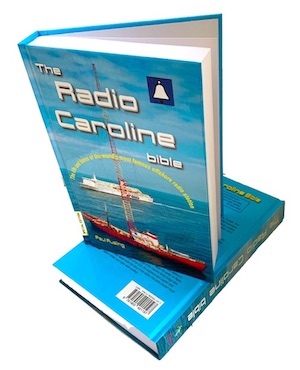
The Radio Caroline Bible is a huge, true and comprehensive book, telling the inside story of Radio Caroline, from the project's very genesis, right up to date (Sep 2021) including the sad passing of Caroline's founder, Ronan O'Rahilly, in 2020.
It’s packed with disasters, boardings, excitement and copious amounts of skull-duggery. There are many inside tales about the major events from all of Caroline’s four eras, told by many of the key people who made Radio Caroline happen. It has much unique content & many ‘never published before’ photos
The book is chronologically correct, illustrated with over 300 photos and drawings, it's fully indexed. Casebound, with strong covers in full colour, the Radio Caroline Bible is over 500 pages long and has a gorgeous full-colour cover showing the Ross Revenge in all her magnificence which will last for many years. This limited print run will surely become a real collector’s item.
An ideal gift
for every radio enthusiast
Click the book cover to see more details.
This guide to radio formats was written to answer many of the queries about radio programming that continue to be raised by professionals within the industry and by listeners and enthusiasts. What do all the radio format names mean and why are there so many?
The book traces the development of radio output over the last hundred years, up to the multi-formulas practiced by the industry today. In the 1920s, radio stations offered a little of most subjects as they tried to maximise their audience by being all things to all men.
Once TV started eating radio’s lunch, stations became more focussed on specific demographic sectors, which the big city stations did by eliminating certain programme types and styles. Europe was busy fighting a war and the patriarchal BBC didn’t bother pandering to listeners, it offered only what John Reith and the Establishment deemed was good.
Future books in the Inside Your Radio series
that will be of interest to listeners & professionals:
2. Broadcast Licensing in Europe.
3. Radio studios – what equipment is needed?
4. Radio transmission - broadcast requirements.
5. Audio processing for broadcast radio.
6. Radio jingles and Station IDs.
To reach specific demographic targets, American stations adopted a scientific approach, laser-targeting the most lucrative audiences, as directed by advertisers. Music playlists excluded all but the biggest hit songs. The main format of Top 40 Pop, Soul, Rock, Classical, Jazz, etc soon split into various sub- genres. Categories that worked well and attracted the largest audiences were soon syndicated, coast-to-coast.
Eventually, the UK heard a limited number of privately-owned stations, forcing the BBC to format its output into four national channels. When the Establishment bestowed a limited network of commercial radio, that was not allowed to choose a format, but had to start with the 1920s idea of “all over the road” programmes. More recently, pirate stations of the 1980s forced the hand of the regulators to allow niche programming, or format radio. The proliferation of new platforms (DAB, satellite and online) also helped new formats too. This is now compelling the regulator to loosen its grip on station output, which is now becoming far more customer driven.
The RADIO FORMATS book explains the main changes and then describes over 130 different radio formats heard on stations both sides of the Atlantic, and how these are driven by radio’s two main elements – music and speech.
This guide to radio formats was written to answer many of the queries about radio programming that continue to be raised by professionals within the industry and by listeners and enthusiasts. What do all the radio format names mean and why are there so many?
The book traces the development of radio output over the last hundred years, up to the multi-formulas practiced by the industry today. In the 1920s, radio stations offered a little of most subjects as they tried to maximise their audience by being all things to all men.
Once TV started eating radio’s lunch, stations became more focussed on specific demographic sectors, which the big city stations did by eliminating certain programme types and styles. Europe was busy fighting a war and the patriarchal BBC didn’t bother pandering to listeners, it offered only what John Reith and the Establishment deemed was good.
To reach specific demographic targets, American stations adopted a scientific approach, laser-targeting the most lucrative audiences, as directed by advertisers. Music playlists excluded all but the biggest hit songs.
The main format of Top 40 Pop, Soul, Rock, Classical, Jazz, etc soon split into various sub- genres. Categories that worked well and attracted the largest audiences were soon syndicated, coast-to-coast.
Eventually, the UK heard a limited number of privately-owned stations, forcing the BBC to format its output into four national channels. When the Establishment bestowed a limited network of commercial radio, that was not allowed to choose a format, but had to start with the 1920s idea of “all over the road” programmes. More recently, pirate stations of the 1980s forced the hand of the regulators to allow niche programming, or format radio. The proliferation of new platforms (DAB, satellite and online) also helped new formats too. This is now compelling the regulator to loosen its grip on station output, which is now becoming far more customer driven.
The RADIO FORMATS book explains the main changes and then describes over 130 different radio formats heard on stations both sides of the Atlantic, and how these are driven by radio’s two main elements – music and speech.
The Radio Caroline Bible is a huge and comprehenmsive book, telling the inside story of Radio Caroline, from the project's very genesis, right up to date (May 2020).
It’s packed with disasters, boardings, excitement and copious amounts of skull-duggery. There are many inside tales about the major events from all of Caroline’s four eras, told by many of the key people who made Radio Caroline happen. It has much unique content & many ‘never published before’ photos
The book is chronologically correct, illustrated with over 300 photos and drawings, it's fully indexed. Casebound with strong covers in full colour, the Radio Caroline Bible is over 500 pages long and has a gorgeous full-colour cover showing the Ross Revenge in all her magnificence which will last for many years. This limited print run will surely become a real collector’s item.
Ideal gift for every radio enthusiast
Click the book cover to see more details.
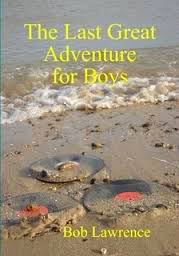
Last Great Adventure for Boys
by Bob Lawrence
Bob's tale is one of derring do, wild weather and high drama on the high seas, and life on the Radio Caroline ship, the Mi Amigo. It's a fictional drama that is gripping right until the end of the story.
The major figures in the story are based on key personnel in the Radio Caroline team of the late 1970s. Life on board the Radio Caroline ship Mi Amigo was often no less dramatic than Bob's story.
The key character in the tale is called Bob and this is almost a 'Dear Diary' tale of his times with the station. A painter and decorator in London in the late seventies, the lead loves Charlton Athletic, old war films and listening to Radio Caroline. By pure chance, our hero ends up decorating the flat of Caroline's manager, the beautiful Olga.
In the right bed at the right time, he is given the chance to leave the paint roller behind and join the radio station. Avoiding arrest is just the beginning, avoiding death is somewhere in the middle and at the end, he faces the ultimate price. Based heavily on the author's real life experiences working on Radio Caroline in the 1970s, this is a fictional tale of love, hate, fear, joy, betrayal, guns, sex, drugs and rock n roll. Truly, a great read and well worth the 14.99.
An interesting novel set in and around the BBC just after World War I. Big changes are in the air, and this time they areally are "in the air" as well as "on the air" This new novel brings to life the exciting days of early radio broadcasting in Biritain...and about one woman in particular who finds her voice while working in the BBC.London, 1926.
In the story, American-raised Maisie Musgrave is thrilled to land a job as a secretary at the upstart British Broadcasting Corporation, whose use of radio-still new, strange, and electrifying-is captivating the nation. But the hectic pace, smart young staff, and intimidating bosses only add to Maisie's insecurity. Soon, she is seduced by the work-gaining confidence as she arranges broadcasts by the most famous writers, scientists, and politicians in Britain.
She is also caught up in a growing conflict between her two bosses, John Reith, the formidable Director-General of the BBC, and Hilda Matheson, the extraordinary director of the hugely popular Talks programming, who each have very different visions of what radio should be.
Sarah-Jane's work has appeared in Marie-Claire, The Guardian, The Boston Globe, Los Angeles Review of Books, Bitch, Slate, Salon, BOMB, etc.
Sarah lives in New York City and has her own web site at http://sarahjanestratford.com.
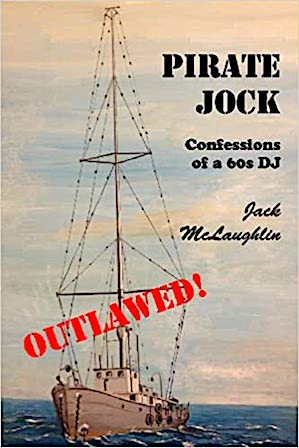
With the arrival of pirate radio ships in the early 1960s, the listening habits of British teenagers changed forever. This brave new world of pirate radio was daring, exciting and glamorous, and one that thousands of young men were desperate to join. Including 22 year-old Jack McLaughlin.
Now a Scottish broadcasting legend, in this book Jack tells how he did just that - and some of what happened next - with death-defying working conditions and high drama, where young pirates risked life and limb to become radio stars. To set the scene, he retraces his early life and career - from bingo caller, to House Uncle in a London children's home, then a History teacher. And tells of the moment that changed his life, when he heard pirate radio being broadcast for the first time.
Once at sea, apart from sex, drugs and rock 'n roll, there are fires, sea sickness, a jail cell and a Force Twelve hurricane. Plus the fierce rivalry and backstabbing of some of his fellow Jocks. All in the context of the Beatles, the Stones, Bowie and Hendrix and the incredibly colourful characters who also found themselves in the off-shore 'floating rust buckets'.
"Pirate Jock is as refreshing as a being hit in the face by a giant wave on a freezing cold day - but a helluva lot more fun. It's the story of the arrival of commercial radio through the eyes of a class broadcaster - who knows how to transmit a great tale."
Brian Beacom, Glasgow Herald
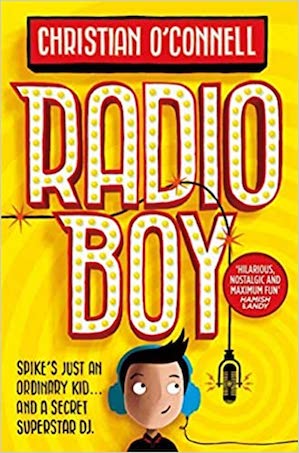
From leading breakfast radio star Christian O’Connell comes a laugh-out-loud story of an ordinary boy with an extraordinary secret radio show. (Broadcast from his shed.) Meet Spike, aka Radio Boy: a new Adrian Mole on the radio for the internet generation.
Spike is your average awkward 11 year old, funny and cheeky and with a mum to reckon with. When he becomes the first presenter ever to be sacked from hospital radio, he decides to carry on from a makeshift studio in the garden shed, with the help of his best friends Artie and Holly, disguising his voice and going by the moniker Radio Boy.
Week by week, word gets around and soon Spike is a star… if only people knew it was actually him. When Spike begins to believe his own hype, and goes too far with his mocking of the school headmaster, a hunt is launched for the mysterious Radio Boy.
Can Spike remain anonymous? Will he get to marry the girl of his dreams, Katherine Hamilton? Will he become famous and popular? The answer to most of these questions is a firm NO!
a few choice NON-FICTION titles for your bookshelf
To reach specific demographic targets, American stations adopted a scientific approach, laser-targeting the most lucrative audiences, as directed by advertisers. Music playlists excluded all but the biggest hit songs.
The main format of Top 40 Pop, Soul, Rock, Classical, Jazz, etc soon split into various sub- genres. Categories that worked well and attracted the largest audiences were soon syndicated, coast-to-coast.
Eventually, the UK heard a limited number of privately-owned stations, forcing the BBC to format its output into four national channels. When the Establishment bestowed a limited network of commercial radio, that was not allowed to choose a format, but had to start with the 1920s idea of “all over the road” programmes. More recently, pirate stations of the 1980s forced the hand of the regulators to allow niche programming, or format radio. The proliferation of new platforms (DAB, satellite and online) also helped new formats too. This is now compelling the regulator to loosen its grip on station output, which is now becoming far more customer driven.
The RADIO FORMATS book explains the main changes and then describes over 130 different radio formats heard on stations both sides of the Atlantic, and how these are driven by radio’s two main elements – music and speech.
This guide to radio formats was written to answer many of the queries about radio programming that continue to be raised by professionals within the industry and by listeners and enthusiasts. What do all the radio format names mean and why are there so many?
The book traces the development of radio output over the last hundred years, up to the multi-formulas practiced by the industry today. In the 1920s, radio stations offered a little of most subjects as they tried to maximise their audience by being all things to all men.
Once TV started eating radio’s lunch, stations became more focussed on specific demographic sectors, which the big city stations did by eliminating certain programme types and styles. Europe was busy fighting a war and the patriarchal BBC didn’t bother pandering to listeners, it offered only what John Reith and the Establishment deemed was good.
This new novel brings to life the exciting days of early radio broadcasting in Biritain...and about one woman in particular who finds her voice while working in the BBC.London, 1926.
American-raised Maisie Musgrave is thrilled to land a job as a secretary at the upstart British Broadcasting Corporation, whose use of radio-still new, strange, and electrifying-is captivating the nation. But the hectic pace, smart young staff, and intimidating bosses only add to Maisie's insecurity. Soon, she is seduced by the work-gaining confidence as she arranges broadcasts by the most famous writers, scientists, and politicians in Britain.
She is also caught up in a growing conflict between her two bosses, John Reith, the formidable Director-General of the BBC, and Hilda Matheson, the extraordinary director of the hugely popular Talks programming, who each have very different visions of what radio should be.
With the arrival of pirate radio ships in the early 1960s, the listening habits of British teenagers changed forever. This brave new world of pirate radio was daring, exciting and glamorous, and one that thousands of young men were desperate to join. Including 22 year-old Jack McLaughlin.
Now a Scottish broadcasting legend, in this book Jack tells how he did just that - and some of what happened next - with death-defying working conditions and high drama, where young pirates risked life and limb to become radio stars. To set the scene, he retraces his early life and career - from bingo caller, to House Uncle in a London children's home, then a History teacher. And tells of the moment that changed his life, when he heard pirate radio being broadcast for the first time.
Once at sea, apart from sex, drugs and rock 'n roll, there are fires, sea sickness, a jail cell and a Force Twelve hurricane. Plus the fierce rivalry and backstabbing of some of his fellow Jocks. All in the context of the Beatles, the Stones, Bowie and Hendrix and the incredibly colourful characters who also found themselves in the off-shore 'floating rust buckets'.
"Pirate Jock is as refreshing as a being hit in the face by a giant wave on a freezing cold day - but a helluva lot more fun. It's the story of the arrival of commercial radio through the eyes of a class broadcaster - who knows how to transmit a great tale."
Brian Beacom, Glasgow Herald
This guide to radio formats was written to answer many of the queries about radio programming that continue to be raised by professionals within the industry and by listeners and enthusiasts. What do all the radio format names mean and why are there so many?
The book traces the development of radio output over the last hundred years, up to the multi-formulas practiced by the industry today. In the 1920s, radio stations offered a little of most subjects as they tried to maximise their audience by being all things to all men.
To reach specific demographic targets, American stations adopted a scientific approach, laser-targeting the most lucrative audiences, as directed by advertisers. Music playlists excluded all but the biggest hit songs. The main format of Top 40 Pop, Soul, Rock, Classical, Jazz, etc soon split into various sub- genres. Categories that worked well and attracted the largest audiences were soon syndicated, coast-to-coast.
Eventually, the UK had a limited number of privately-owned stations, forcing the BBC to format its output into four national channels. When the Establishment bestowed a limited network of commercial radio, that was not allowed to choose a format, but had to start with the 1920s idea of “all over the road” programmes. More recently, pirate stations of the 1980s forced the hand of the regulators to allow niche programming, or format radio. The proliferation of new platforms (DAB, satellite and online) also helped new formats too. This is now compelling the regulator to loosen its grip on station output, which is now becoming far more customer driven.
The RADIO FORMATS book explains the main changes and then describes over 130 different radio formats heard on stations both sides of the Atlantic, and how these are driven by radio’s two main elements – music and speech.
Future books in the Inside Your Radio series
possibly of interest to listeners & professionals:
2. Broadcast Licensing in Europe.
3. Radio studios – equipment needed?
4. Radio transmission - broadcast meeds..
5. Audio processing for broadcast radio.
6. Radio jingles and Station IDs.
Bob's tale is one of derring do, wild weather and high drama on the high seas, plus life on the Radio Caroline ship, the Mi Amigo. It's a fictional drama that is thoroughly gripping, right until the end of the story. The major figures in the story are based on key personnel in the Radio Caroline team of the late 1970s. Life on board the Radio Caroline ship Mi Amigo was often no less dramatic than Bob's story.
The key character in the tale is called Bob and this is almost a 'Dear Diary' tale of his times with the station. A painter and decorator in London in the late seventies, the lead loves Charlton Athletic, old war films and listening to Radio Caroline. Oour hero ends up decorating the flat of Caroline's manager, the beautiful Olga.
In the right bed at the right time, he gets the chance to join the radio station.
Based heavily on the author's real life experiences working on Radio Caroline in the 1970s, this is a fictional tale of love, hate, fear, joy, betrayal, guns, sex, drugs and rock'n'roll.
It’s 1966. Broadcasting from ships and forts out at sea pirate radio has seized popular imagination. Stations like Caroline, London and Radio City, all in the Thames estuary, are listened to by millions.
Determined to bring free radio to his beloved north-east, Stan Metcalfe acquires an old Belgian fishing boat and a transmitter. Helped by wartime friends from the French Resistance, a US army deserter and a cat called George, Stan sets sail for the Yorkshire coast.