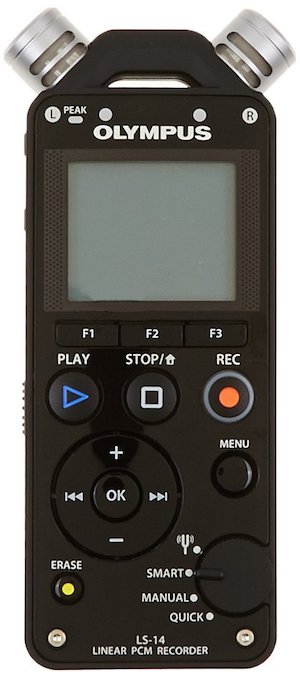
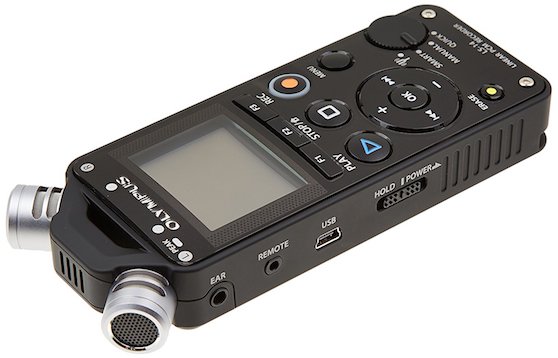
Most laptops and desktops PCs today have an internal microphone, which, with some music recording software is all you need to record audio. The problem with this basic set up is that the audio quality will be awful. The kind of internal microphones installed in computers will not have a great dynamic range, and being mounted in the hardware is likely to pick up all kinds of movement and vibration, from keyboard clicks to the whirr and hum of any internal fan.
Microphones should ideally be optimised for the kind of audio that is being recorded - there are hundreds of microphones, its not a case of 'one size fits all'. Selecting an appropriate microphone is voital, but having an external microphone is a must if any serious recording is to be done.
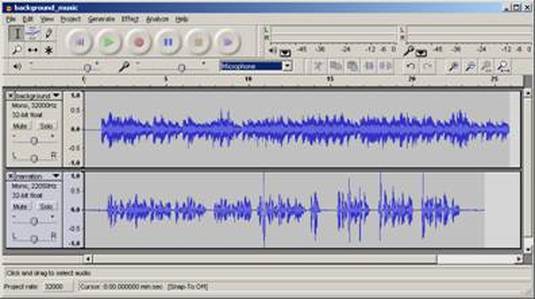
The expert recording engineer will always try to record audio the best way possible (see below). You don't need to have the best recording software to get good results, and the basic programme such as Audacity will be more than sufficient - its talent that's needed in radio production! The talent can be developed and nurtured through a suitable training programme - always get some good tuition, such as Audacity Flex which is training that works. it's thorugh and has been the start to mnany top recording engineers' careers.
Audacity Flex currently have a special offer with 650 FREE sounds for use in making your own jingles; well worth the £30 for the course. Why not enrol now? You will learn far more than you could ever read in books or on the web.
Audio Interface
This is the circuitry which marries the analogue souind, obtained from the microphone, and converts it into digital signals that a compouter can understand and process.
While you can pay thousands for all-singing, all-dancing audio interfaces, this is sheer extravegance. A simple converter, or interface, can be had for around £20. Extra channels will add only a fiver or so.
MIDI - Music Instrument Digital interface
Most of the programs used in studios have virtual instruments included in the software. These virtual instruments enable you to add many odd sounds and special effects to your sound, they can all be regarded as ingredients in the mixture of a great audio production.
You do however need to trigger and alter the electronic, or virtual, intsruments and the tool for that is called a MIDI Controller. The most common type of MIDI controller is a simple keyboarde. A full size one is the standard 88 key piano keytbopard, often with extra controls (such as volume and pitch) included which alter and shape the virtual sounds you will make.
There are two kinds of monitors founs in a studio - both enable you to 'see' the sound and hear it too. The computer screen shows a visual impression of what's going on - these were previously called VDU (visual display unit). The computer business has however now kijacked the term 'monitor' to mean screen, which is very confusing for pure audio engineers who traditionally thought of a monitor as being a an aural transducer - or a louspeaker.
It's vital that the monitor (usually a pair of matched speakers, to give stereo output) speakers should have a fairly flat frequency response. They are designed that way to get your recording quality as balanced as possible.
There are at least five hundred different microphone types on the market of many different types. Please see our separate page all about microphones HERE.