SHORT WAVE radio is a band of frequencies, generally between about 3 MHz (3000 kilohertz) and 30 Megahertz. The wavelength of these transmissions is from 160 metres (3 MHz) and 10 Metres (30 MHz)
The 'ground wave' distance that Short Wave signals travel is pretty short, perhaps only about a dozen miles. Early users of radio broadcasting believed that the frequencies above 3 MHz or so were, as a result of the perceived short range dismissed as being "next to useless". As a result, they were offered to radio amateurs to experiment with. They made an amazing discovery - the short wave signals, while disappearing and fading out after 10-20 miles, were in fact reappearing thousands of miles away, making it possible to use them for intercontinental comms.
It was invaluable for ships and later for planes - which are still equipped with short wave transceivers, although satellite communications means they SW becomes less important each year.
Private / independent
Short Wave Stations
For many years, access to the Short Wave broadcast bands was strictly regulated, long after some authorities allowed private stations to broadcast on MW and FM.
In recent years, several European regulators have allowed some short wave operators to set up HF Broadcast transmitters. Germany has allowed some private / independent HF transmitters, as can be seen from the table below which shows the European SW / HF situation in 2025
SW or HF?
Cycles or Hertz?
These two abbreviations are used throughout the radio world. Short Wave is a description of the wavelengths and the SW bands vary from 10 metres up to 160 metres. These wavelengths correspond to frequencies from 2 MHz to around 30 MHz.
The HF tag abbreviates High Frequency, which when they were first used, these were the highest frequencies attainable.
In the early days of radio, frequencies were called cycles / kilocycles / megacyles, but the use of cycles has now been replaced by HERTZ, in honour of HEINRICH HERTZ, the German scientist who proved the existence of radio waves.
World Radio TV Handbook has been long regarded as THE essential directory to the Short Wave bands. It is the most comprehensive guide to broadcast stations. The 2026 book is the 80th edition, and pretty special.
An international network of contributors help provide the most up-to-date information on medium wave, short wave and FM broadcasts and broadcasters available in any publication. Articles on topics of interest to professionals, listeners and dxers alike iplus many regular items. WRTH also reviews the latest receivers and equipment including the AOR AR5700D, Icom IC-7610, KiwiSDR, Bonito MegaDipol, Tecsun PL-990, and the SDRPlay range.
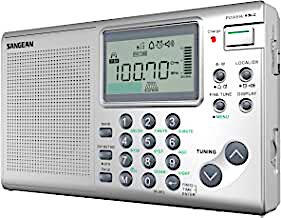
There are dozens of Short Wave radio receivers still available and new ones coming to the market all the time, although today, most are internet or ONLINE radios.
For a selection of the models on the market, CLICK HERE for a selection.
SW or HF?
Cycles or Hertz?
These two abbreviations are used throughout the radio world. Short Wave is a description of the wavelengths, and the SW bands vary from 10 metres up to 160 metres. These wavelengths correspond to frequencies from 2 MHz to around 30 MHz.
The HF tag abbreviates High Frequency, which when they were first used, these were the highest frequencies attainable.
In the early days of radio, frequencies were called cycles / kilocycles / megacyles, but the use of cycles has now been replaced by HERTZ, in honour of HEINRICH HERTZ, the German scientist who proved the existence of radio waves.
World Radio TV Handbook has been long regarded as THE essential directory to the Short Wave bands. It is the most comprehensive guide to broadcast stations.
An international network of contributors help provide the most up-to-date information on medium wave, short wave and FM broadcasts and broadcasters available in any publication. Articles on topics of interest to professionals, listeners and dxers alike iplus many regular items. WRTH also reviews the latest receivers and equipment including the AOR AR5700D, Icom IC-7610, KiwiSDR, Bonito MegaDipol, Tecsun PL-990, and the SDRPlay range.