LASER RADIO
it turned on
the UK in the 80's

The World of Radio globe
LASER RADIO
sounds that turned on the UK in the 1980s
LASER was THE 1980s radio phenomenon that changed radio.
 
The LASER project was carefully engineered to be totally legal and attracted lots of  publicity and a large audience. The project began as Laser 730 but after problems, was relaunched as Laser 558 in May 1984. Though only on air for 18 months  it had, according to the BBC, five million listeners in the UK and a similar number in the Benelux.
 
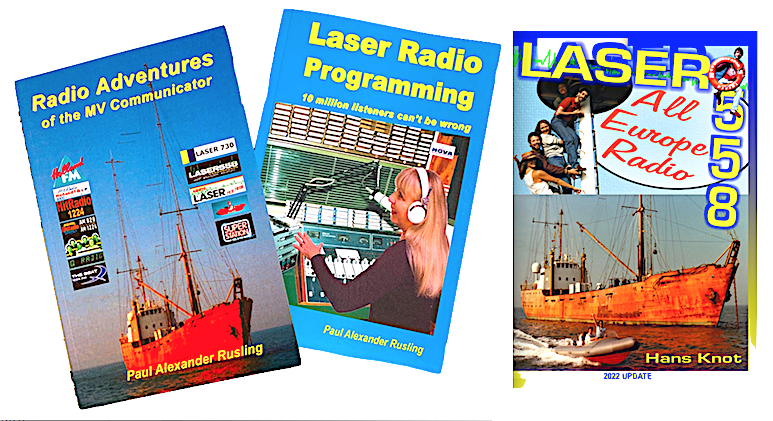
THREE major books about LASER
all are available direct from
World of Radio.
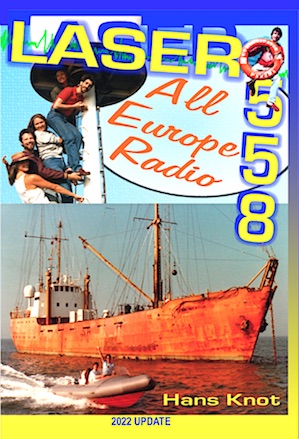
All Europe Radio
LASER 558
Hans Knot's diary of Laser 558, tells about the days when the Communicator had 10 million listeners. All the DJ hirings, when they left and why, plus the Laser commercials, record plugs and the  downtime periods to rebuild the masts!  Hans' book is treasured but was  out of print for years. Now republished for 2022, it's a rivetting read & a 'must have item' for an anorak library.
Select the correct flag to avoid delays.
 
For delivery to
UK addresses
 
 
EU addresses
(includes EU book tax)


Rest of the World
Hans Knots book about Laser 558
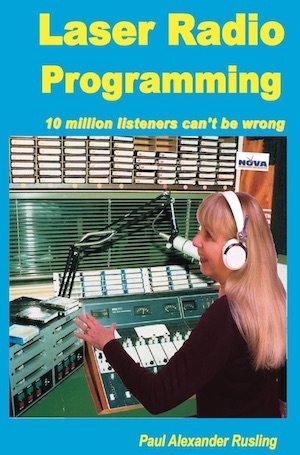
Laser Radio Programming
 
Describes Laser's format, programming techniques, the secrets and more. Lots of biographical information and pictures of every DJ on Laser 730, Laser 558 and Laser Hot Hits. An exciting and turbulent life ensued, but poor shore support led to a mutiny and the crew bringing the ship into harbour, where creditors had her arrested. After repairs, she became Laser Hot Hits.
Book about LAser Radio Programming
Select the correct flag to avoid delays.
 
For delivery to
UK addresses
 
 
EU addresses
(includes EU book tax)


Rest of the World
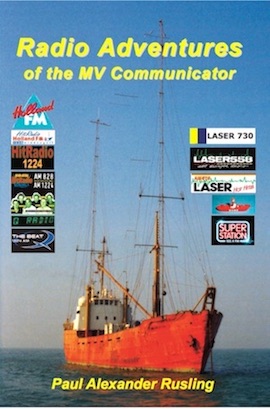
book about MV Communicator
Radio Adventures of the
MV Communicator.
 
The story of one of the best known radio ships, that was home to 11 radio stations during its 22 year career. How the ship was bought, converted in Florida and sailed to Europe. Her rebuilding in Portugal and then to Holland to broadcast Veronica Hot Hits and two more stations to huge success, then to the UK again as The Superstation before her demise in 2006.
Select the correct flag to avoid delays.
 
For delivery to
UK addresses
 
 
EU addresses
(includes EU book tax)


Rest of the World
a trio of Laser books
When a new radio ship arrived off the Thames estuary in 1984 it attracted a huge audience, simply by playing what listeners wanted.
  
Laser’s competitors howled in protest, but neither they nor the British Government were unable to stop it. Eventually Laser’s own ineptitude and a mutiny by the crew saw the ship sail into port.  A year later a new crew relaunched it and Laser was back - bigger and better than ever. Lack of investment, bad weather and some rotten luck saw the ship having to close down again, but the ship finally struck treasure in Holland.
 
Millions of listeners rued the day the Communicator sailed away, but the BBC and ILR stations finally reacted to Laser’s programming initiatives and started to win their audiences back.  Petty restrictions limiting the music on British radio were lifted and radio listeners were happy once again. Or were they?
 
Could another radio ship capture a big audience again?It's all debated and discussed in the book -
    Laser Radio Programming   
Brandy Lee DJ on poop deck
  Laser Radio Programming
examines why Laser was such a big success in the 80s, and discusses Laser's effects on today’s radio.
 
The Laser Radio Programming book has 175 pages describing radio programming policy and techniques of the major offshore stations, but especially Radio Caroline, Laser and the Laser project's 'grandad' whose style and fresh format inspired the founders, 1966 super station  - Swinging Radio England.
 
There's a reprint of Laser's full Operations Manual and a discussion on the format, music playlisting, strap lines, trailer production and other techniques that Laser used to attract an audience of ten million.
  
The book also looks at how the Laser name, imaging and ethos has been used  to change radio since. There are details of radio ships YOU can visit; not one, not two but THREE radio ships! The book has a full listing of all the Laser DJs, complete with biographies and pictures too!
 
LASER helped revolutionise British radio in the 1980s. Its effects are still felt today and more of Laser's ideas may be put into action soon, as rules on radio are further relaxed.
 Laser Hot Hits 
After Laser's ship was brought into harbour her operators and owner simply abandoned her. The ship and entire radio station were arrested and sold at auction by the Admiralty Marshall to pay staff and other debts.
 
Despite Laser's cachet and reputation, the entire operation was sold for only £35,000, a remarkable bargain considering that well over $1.5 million had been invested to date.
 
The ship spent most of 1986 in harbour in Harwich and finally sailed back to sea in late November. She had ostensibly been sold by her lucky buyer, East Anglian Productions, to an associated Panamanian company, Cord Cabo.
 
The Laser Hot Hits sales and support team included former Laser 558 team members John Catlett as MD,  Paul Fairs and John Cole. This time they were working without New York's constricting block on British adverts and they had offices in London and Texas as well as New York.
Contents of
  Laser Radio Programming 
 
UK RADIO BEFORE LASER  
BBC programming heritage, Offshore Radio,  Music, Laser's Grandad,   SRE jingles, Marine Offences Act,  Radio Formats,  Hot Clocks, PlayLists, UK Music Radio in 1983, Meaningful Speech, Needle Time
 
LASER 730
Programme Meetings, Straplines & Slogans, Jingle jangle,  Laser's Music, Wolfman Jack,  Selection of Frequency, Test Transmissions, Laser 730 Team
 
LASER 558
Music Programming, Hot Clock, Format, Coverage & Audience,  Logo,  Laser 558 Merchandise, Why was Laser so successful?  Artists, Music,  Audio fidelity,  Studio Equipment, The Laser 558 Team
 
LASER HOT HITS
Laser 576, The Hot Hits Format, The Launch, Programming,  Music, the Laser Hot Hits Hot Clocks,   Live Reads, News Bulletins,  Laser Hot Hits DJs
 
LIFE AFTER LASER
Golden Oldies,  Merchandise,  Books,  Road Shows, Tribute Broadcasts, The Laser Blasts and Name,  Movies,  Radio  Day,   Radio Caroline
 
APPENDICES
Internet Links, Birth Announcement of Laser & Declaration of Policies,  Copy of the The Laser Operations Manual
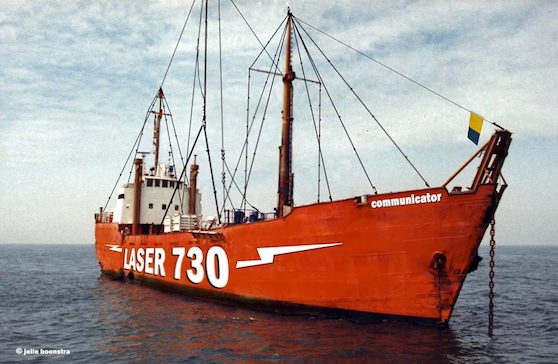
In late 1983 Paul Rusling drew up a colour scheme for the Communicator to be painted with the name of the radio station along the sides of the ship, similar to the large lettered names of lightships. It was originally intended as a homage to the signing on the MV Caroline ship in Ramsey Bay, which could be clearly seen (most days) from the seafront at Ramsey. Sadly the scheme was never completed, but in this picture, well-known Dutch radioship expert Jelle Boonstra has super-imposed Paul's design on a photo of the ship, to show how effective it would have looked. Corporate names on  ships are now commonplace.
Communicator signed Laser 730
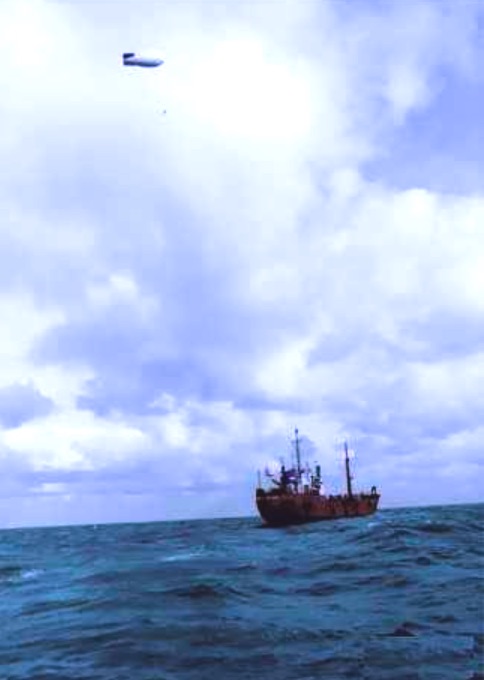
The first transmissions from the Communicator were on Saturday 21st January 1984, with a power of 50 kilowatts on 729 KHz, using an antenna held aloft by a balloon flying 354 feet above the ship. Only non stop music was heard during the balloon test transmissions, except for one quick I.D.by Paul Rusling. Laser was well heard all over Europe that day.
 
Sadly, the balloons were never tethered correctly and were lostin high winds and a blizzard. After the crew lost the two balloons, a small team of engineers (Paul Rusling, Blake Williams, Robin Adcroft, Johnny Lewis and Dave Black-Davidson) toiled for a week to build a temporary antenna, and then conducted ten days of tests in February which brought in over 2000 reception reports, that persuaded the owner to fund a new antenna system.
 
The full story of the Laser 730 transmissions and the fun of flying balloons in the North Sea in January can be found (with photographs) in Chapter Four of the book The Radio Adventures of the MV Communicator.  
 
Radio ship flying a balloon
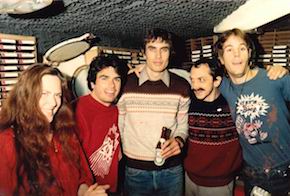
Pic of some Laser DJs team
Tall ad for RAC book
The Communicator was a remarkable ship. The home to no less than 11 radio stations throughout her life - few enthusiasts can name them all. Some were very short lived.  How many can you name? They all have their logo on the front cover of
   Radio Adventures of 
  the MV Communicator
and you can read all about each station in this exciting book, written by Paul Rusling who put the thing together, with some help from the various DJs, the radio engineers, crew members and the owners of some of the stations.
 
To find out more and how you can obtain a copy (it's available in softback and hardback) click HERE, or the book cover.
The true story of
Europe's most controversial radio ship.
 
Laser Jocks:  Jessle, Ric, Paul, Steve and Dave
Cover of book about MV Communicator
Charlie Wolfe's eyes
DJ Brandy Lee in her LASER HOT HITS pullover on the poop deck of the MV Communicator
 
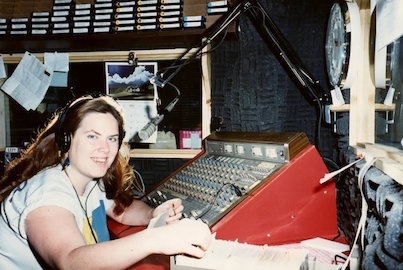
DJ Jessie Brandon practicing in the main studio while crossing the Atlantic in the Communicator
Jessie is on air on Laser558
Laser's mysterious owner
By using only American DJs and supplying from Spain, the station was100% legal. Unlike neighbouring Radio Caroline,  Laser's New York management had made a lot of enemies and an investigation by MI6 was launched to find out who was behind this new, very successful station,  which attracted about 5 million listeners in the UK, and a similar number on the near continent.
 
Newspapers in the UK ran several stories about who the mysterious owner(s) might be, and the Evening Standard  "outed" a BBC TV journalist, Roger Parry, alleging his involvement. Laser wasn't American at all, it was in fact funded by a very private Irishman, Philip Smith, who preferred to remain incognito.
 
His secretiveness appears to have alarmed the establishment, who were persuaded by the licensed commercial radio stations to try and close the station. They were unable to act as the station had been set up to be legal, although some of the team broke the law to cut costs, which ultimately led to Laser 558's downfall.
By using only American DJs and with supply tenders from Spain, Laser was 100% legal,  so could not be touched by the UK.
 
Surveillance by the UK authorities revealed that Laser was however being supplied clandestinely from Kent and the UK commercial radio stations campaigned to have Laser and Caroline silenced claiming the two radio ships were "stealing their listeners".  This was ultimately to bring down Laser as the UK government found that it could 'starve out' the station simply by blockading supplies from the UK.
 
At launch, Laser 558 was an immediate success and during Summer 1984 became THE trendy radio station to tune to, with its non stop music diet of latest hits, Gold tracks and 'hip and groovy' American DJs. The line up that summer was Ric Harris, Jessie Brandon, Dave Lee Stone, Steve Masters, Tommy Rivers, Holly Michaels, Paul Dean and Charlie Wolf.
 
Technical Information
Laser played most of its music from tape cartridges to enable the American managers to keep control over content.  A former scientific research laboratory at the stern of the ship was converted into two broadcast studios plus a newsroom, which contained a Kaypro 4 computer and telex link for communicating with the station's office in New York. This link was achieved by a COMSAT installation on the upper deck, which used the Inmarsat birds.  The satlink could also access the regular telephone networks, although at $15 a minute was an expensive way of getting messages across. Later the ship used a private marine VHF channel back to its base in Kent with an audio scrambler.
 
Details of Laser's transmitters and other technical details can be found in the book RADIO ADVENTURES OF THE MV COMMUNICATOR.