Video killed the radio star?
Nonsense! In fact, video simply nibbled at radio’s lunch. Radio is in pretty rude health with listening figures never having been so high, though some parts of the legacy, ad-supported broadcasters are encountering difficulties, just as those in print have too. It’s simply the evolution of how the world consumes media.
Video could never replace radio, because screen-based entertainment demands the undivided attention of the consumer. You can’t watch TV or any other screen device, such as gaming, while doing housework, but you can listen to the radio while multi-tasking. Screens are frowned on at most places of work as they are too distracting. But it's is not so important, having the radio playing as backcround. This is particularly the case in cars where TV reception is illegal if visible by the driver.
Podcasting is now firmly embedded in modern culture. One podcast is the core of the latest TV drama series, in which a Scottish podcaster covered a cold crime from 25 years ago. The murder of a girl in St Andrews was debated in the podcast, compelling police to reopen the case.
Three quarters of the UK’s population are now aware of podcasts and almost 50% claim to have listened to one in the last month. Podcasts are now familiar an essential part of most large company’s public relations activities.
Until very recently, broadcasting meant sacrificing a lot of time, money and space for bulky equipment. Today, broadcasting takes minutes to organise, whether for traditional radio signals through the ether or for podcasts, which can be thought of as individual radio programmes or shows, delivered to the listeners own schedule; on demand!
All you need to know
about Podcasting
World of Radio

Podcasts and Podcasting
Podcasting
Podcasting - a guide
Podcasting is the newest media of all and is growing at a phenomenal rate. While downloading audio began in the 1990s, it was only in 2004 that the word podcast was first coined, though it took ten years to get any real traction.
In recent years podcasting snowballed and online delivery of individual episodes of radio programmes "on demand" has attracted a lot of radio's listeners.
Is podcasting simply "radio on demand",
with the listeners deciding the schedule?
Podcasting - a guide . .
. . describes what a podcast is and how its made, before guiding the reader through the history of the medium and the technical aspects of the equipment needed to produce a podcast. It also looks at who is distributing the podcasts and at some of the 'movers and shakers' in the industry, the main corporate players and sources of media coverage about this latest way to disseminate or obtain education, knowledge, news and entertainment.
Author Paul Rusling draws on his decades in radio broadcasting and podcast consulting to steer readers through the minefield of studio equipment, web host servers, directories, meta, distribution and audience metrics, to give a broad overview of this exciting new medium.
The Podcasting ~ a Guide book also explores the fascinating history of podcasts -
How did the phenomenon start?
Who were the pioneers?
What product affected it most?
There are chapters about the current state of play, the future of podcasting and a section on technical aspects, including a look at VIDEOCASTING, and VLOGGING. The book describes some of the equipment used in assembling podcasts, including theTenLamp and Rodecaster Pro bundles, which include everything needed.
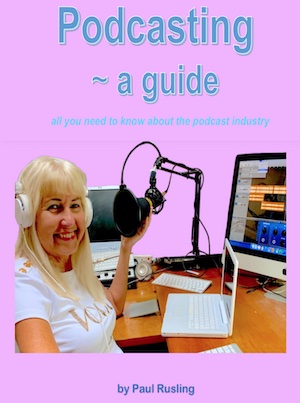
Click the book cover above to order 'Postage Free' to UK

Author Paul Rusling draws on his decades in radio broadcasting and podcast consulting to steer readers through the minefield of studio equipment, web host servers, directories, meta, distribution and audience metrics, to give a broad overview of this exciting new medium.
The Podcasting ~ a Guide book also explores the fascinating history of podcasts -
How did the phenomenon start?
Who were the pioneers?
What product affected it most?
There are chapters about the current state of play, the future of podcasting and a section on technical aspects, including a look at VIDEOCASTING, and VLOGGING. The book describes some of the equipment used in assembling podcasts, including theTenLamp and Rodecaster Pro bundles, which include everything needed.
. . describes what a podcast is and how its made, before guiding the reader through the history of the medium and the technical aspects of the kit that's needed to produce a podcast. It also looks at who is distributing the podcasts and at some of the 'movers and shakers' in the industry, the main corporate players and sources of media coverage about this latest way to disseminate or obtain education, knowledge, news and entertainment.
Podcasting is is the newest media, and it's growing at a phenomenal rate. While downloading audio began in the 1990s, it was only in 2004 that the word podcast was first coined, and it took ten years to get any real traction.
In recent years podcasting snowballed and online delivery of individual episodes of radio programmes "on demand" has attracted a lot of radio's listeners.
Is podcasting simply "radio on demand",
with the listeners deciding the schedule?
Once a podcast is available online, the listeners are sent a notification, and they can access it whenever it suits them. It’s still a programme that wouldn’t sound out of place on a radio station schedule. It’s still presented by a host, who needs largely the same skills and expertise but the schedule depends on the listener, when they can find time to listen. The podcaster is performing at the convenience of the podcast listener.
The BBC brought traditional broadcasting to the world of podcasting even further when it launched its BBC Sounds venture in 2018 to replace the audio service, BBC iPlayer. The new BBC Sounds offers online delivery of all BBC audio, both regular radio programmes and podcasts. All BBC radio programmes are now available as streams, as they are being broadcast ‘over the air’, enabling listeners to rewind and replay. The programmes remain available online for varying lengths, some for up to several years.
Podcasts are extending the life of the simple radio programme and expanding it into new more accessible fields. This is especially true of podcasts that broaden the listeners minds, cater more finely to their tastes and interests, fulfil their demand for niche coverage and enable them to control their own schedules.
Podcasts are a symbol of freedom, and remain free of either regulation or control by big business. They offer freedom of expression and a way of sharing knowledge and unfettered entertainment.
Video killed the Radio Star?
It certainly did NOT!

Video killed the Radio Star?
It certainly did NOT! |
includes everything you need for professional-quality audio creation: a 3.5mm condenser mic with a disk bracket and the much-respected G10 mixer from TenLamp. Perfect for podcasters, gamers, streamers, and content creators who want an all-in-one solution for mixing, recording, and streaming. Designed to work with multiple inputs, including a SmartPhone input.
Get on the air NOW!
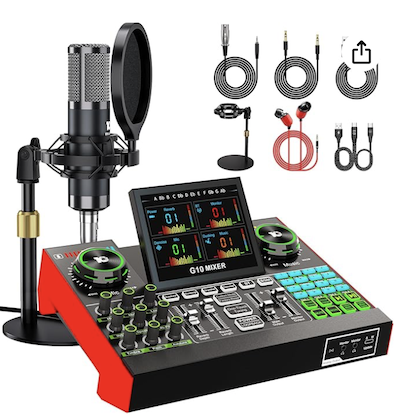
PODCAST STUDIO BUNDLE "Ready to Broadcast"
with live sound board / audio mixer. This Podcast Bundle comes with a 3.5mm Condenser Mic (P15) for PC/Phone, streaming, singing, gaming, voice-changing, denoise filters & more

Podcasting is the expressional medium with therapeutic value we’ve been missing in our lives for decades. Luckily, popularity has been growing exponentially over the last few years - did you know the number of Americans who are weekly podcast listeners over the last 7 years has tripled?
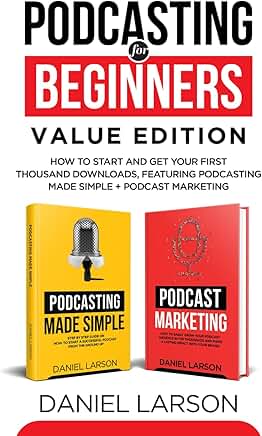
As a bonus you’ll also get Podcast Marketing: How to Easily Grow Your Listeners in the Thousands and Make a Lasting Impact with Your Brand. This book will help you grow your listenership by taking you from confused and doubtful to clear and confident in growing your show and attracting your ideal audience in the masses.
Podcasting for Beginners
A versatile cache of kit to make your Podcast sound professional.
Podcasting is the expressional medium with therapeutic value we’ve been missing in our lives for decades. Luckily, popularity has been growing exponentially over the last few years - did you know the number of Americans who are weekly podcast listeners over the last 7 years has tripled?
As a bonus you’ll also get Podcast Marketing: How to easily grow your audience and make a lasting impact with your brand. This book will help you grow your listenership by taking you from confused and doubtful to clear and confident in growing your show and attracting your ideal audience in the masses.
Video killed the radio star?
Nonsense! In fact, video simply nibbled at radio’s lunch. Radio is in pretty rude health with listening figures never having been so high, though some parts of the legacy, ad-supported broadcasters are encountering difficulties, just as those in print have too. It’s simply the evolution of how the world consumes media.
Video could never replace radio, because screen-based entertainment demands the undivided attention of the consumer. You can’t watch TV or any other screen device, such as gaming, while doing housework, but you can listen to the radio while multi-tasking. Screens are frowned on at most places of work as they are too distracting. But it's is not so important, having the radio playing as backcround. This is particularly the case in cars where TV reception is illegal if visible by the driver.
Podcasting is now firmly embedded in modern culture. One podcast is the core of the latest TV drama series, in which a Scottish podcaster covered a cold crime from 25 years ago. The murder of a girl in St Andrews was debated in the podcast, compelling police to reopen the case.
Three quarters of the UK’s population are now aware of podcasts and almost 50% claim to have listened to one in the last month. Podcasts are now familiar an essential part of most large company’s public relations activities.
Until very recently, broadcasting meant sacrificing a lot of time, money and space for bulky equipment. Today, broadcasting takes minutes to organise, whether for traditional radio signals through the ether or for podcasts, which can be thought of as individual radio programmes or shows, delivered to the listeners own schedule; on demand!