Your Speaking Voice
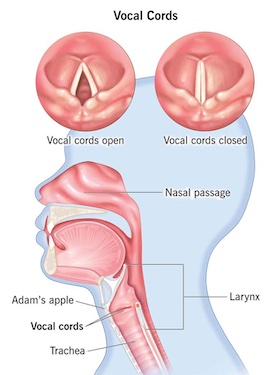
The voice is made up of muscles, cavities, tissues, nerves, fluids, etc., just like the rest of the human body.. It can produce at least 325 different pitches. There are more nerves in the muscles of the larynx than any other muscles in your body, with the exception of your eyes. In addition, you use three quarters of your body when you speak a word, and even a stubbed toe can affect the sound of your voice. So it’s not surprising that your voice can be adversely affected by excitement and stress.
Just as with the rest of your body, some people naturally have more vocal strength, while others need to pump up theirs just to keep up with their daily vocal requirements. I cannot know the exact cause of the reader’s quivers without speaking with them, but it is likely that the cause of their quivering voice is either nerves, or lack of vocal strength, or both. Regardless of the case, voice training using proper vocal exercises can make a world of difference in both control and endurance in the voice.
Unless you are a voice practitioner, or have studied with a voice professional (which I highly recommend!) you may not know what proper vocal exercises are. So here is a mini-workout that you can use every day to get your voice in shape and get control of those tremors, quivers, and flips when you speak.